Because I don’t wanna vacation somewhere if the monkeys in the area are gonna get hurt by it
Corporate (North) America can really start to get to you. Ya know? Like you start to feel a sense of deep misery seep into your soul as you go to a place (virtually or physically) for 8 hours to fill an unnatural role that feels like you’re underwater but have just enough air to breathe—and when you finally clock out, the free time is spent catching your breath.
So, do I blame people when they book a trip to a beautiful place abroad to rest, relax, and rejuvenate, and forget about the fact that they have to return, once again, to their little golden prison? No, not at all.
Because that’s what I did. I visited beautiful, beautiful Costa Rica, a country whose main source of income is driven by tourism. Crazy how an entire place can be diminished to a means for pleasure—and not even its own.
But I am not any better. I still stayed at a nice hotel and partook in ziplining and dolphin watching (all with local guides), but regardless, I still did the tourist dance.
My first excursion was snorkeling to Isla Chora in Sámara, Guanacaste. It was raining when we got to the beach and the water was twirling aggressively, but the guides reassured us kayaking to the island wouldn’t be a problem—and honestly, they were completely right. Outside of the rain and murky clouds, it was a vigorous but delightful paddle to the shore of the island.
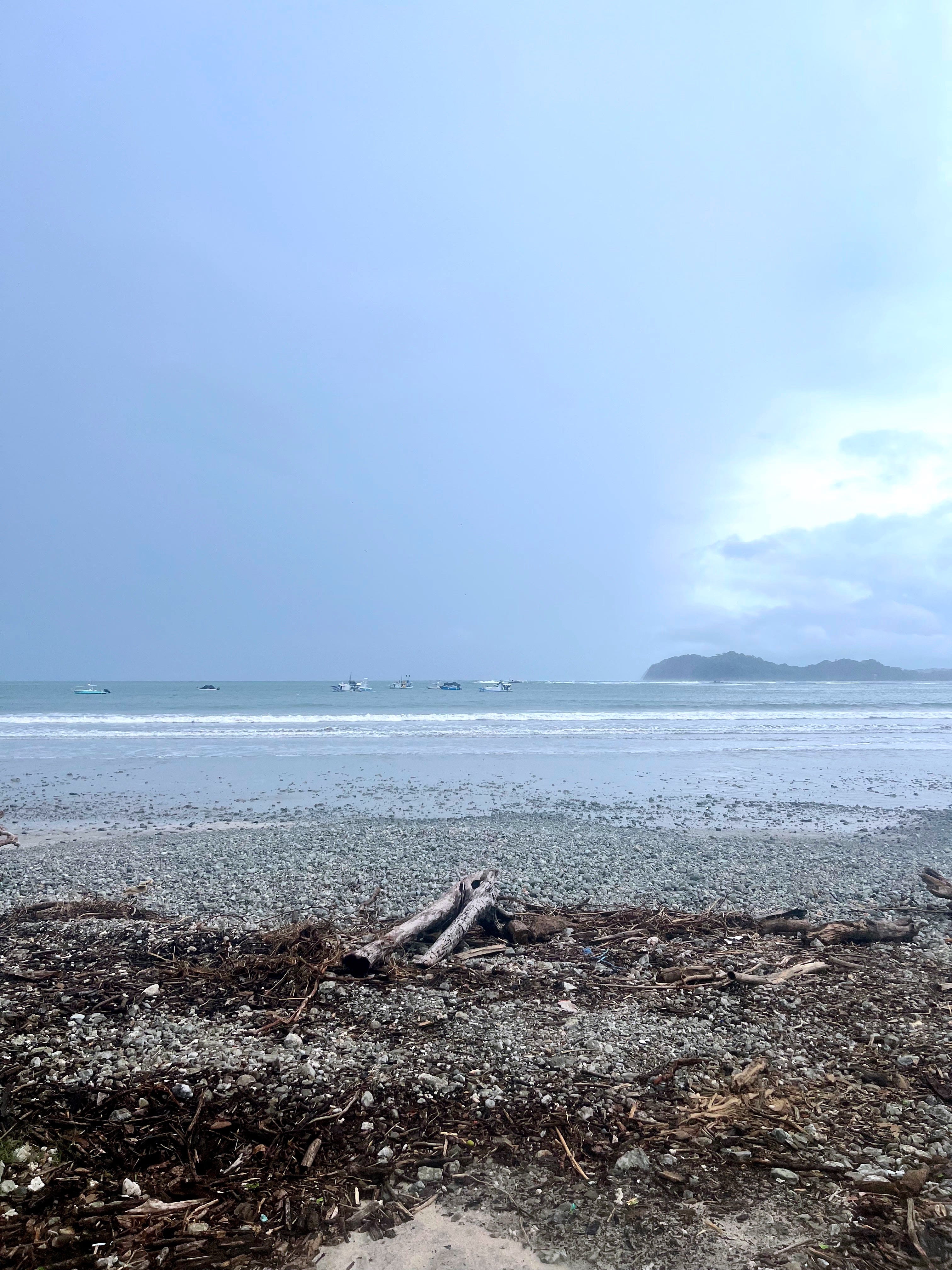
The tour included about 15 other people, and I met Margaret and Kyle, a couple in their early 20s. They were from Gatineau in Ottawa, which they immediately shared once I said I was from Toronto. And as Canadians do when we meet abroad, we spent the whole time chatting. They told me the night before they found a huge crab in their Airbnb and had to look for a new place to stay.
They also told me they were visiting a sanctuary the next day, Sibu Wildlife Sanctuary, and that they rented a car to get there, and I was welcome to join. It was located in Nosara (a place I already wanted to visit), just an hour away from where I was staying, but it was a very bumpy drive and I wasn’t up for going there alone, so their offer felt like a good omen.
All I needed to do now was get tickets for their tour, so when I got back to my hotel, the first thing I did was get my debit card out and go on their website. The tour for the next day was full, so the next earliest option was Thursday at 9:30 a.m., which I immediately placed my $30 deposit for, without having a clue as to how I would get there without my fellow Canadian friends. I just really wanted to go.
I ended up taking a taxi to the sanctuary, which was a little funky since my lovely taxi driver really didn’t know this sanctuary existed, and I just kept saying “Sibu” and “monkeys,” which provided no real direction.
I was driving from Sámara, the place I chose to reside for the week since it was considered a safe place for solo female travellers—and honestly, for the most part, I’d give the safety like a 7.5/10. It’s a quaint, fully walkable town where you can find all the tourists and locals in one spot past 12 a.m during low season.
The people who live in the area have a great sense of humour and, most often, passed the vibe check as a woman traveling alone. And the food is very fresh and yummy, like, best ceviche ever.
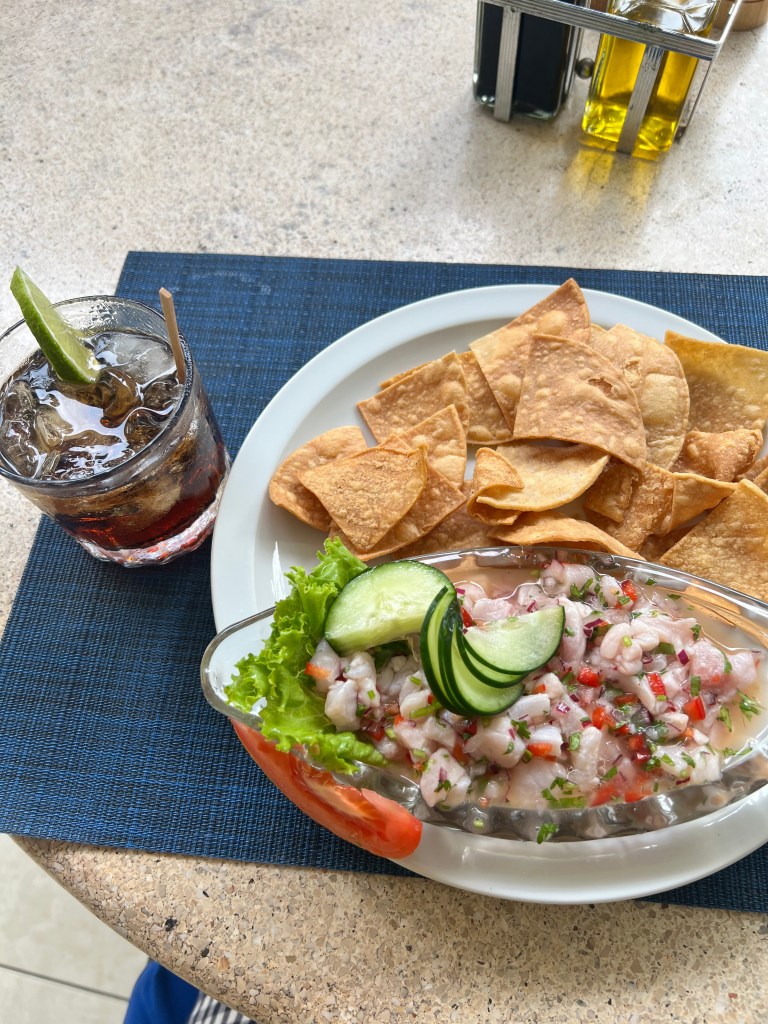
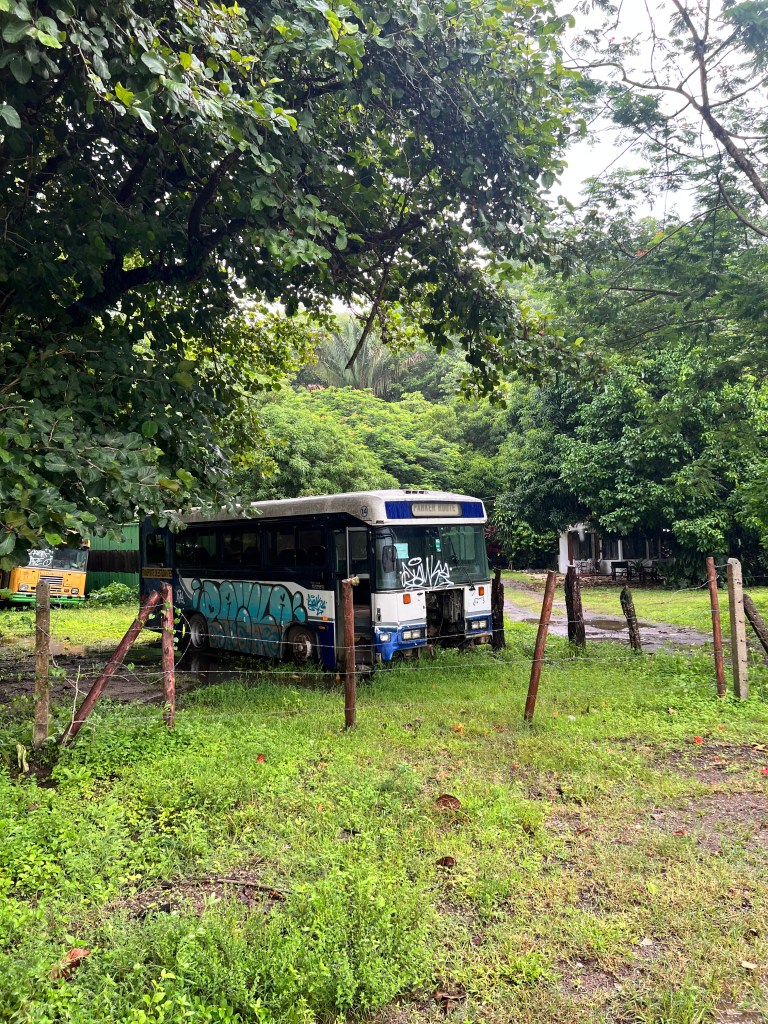
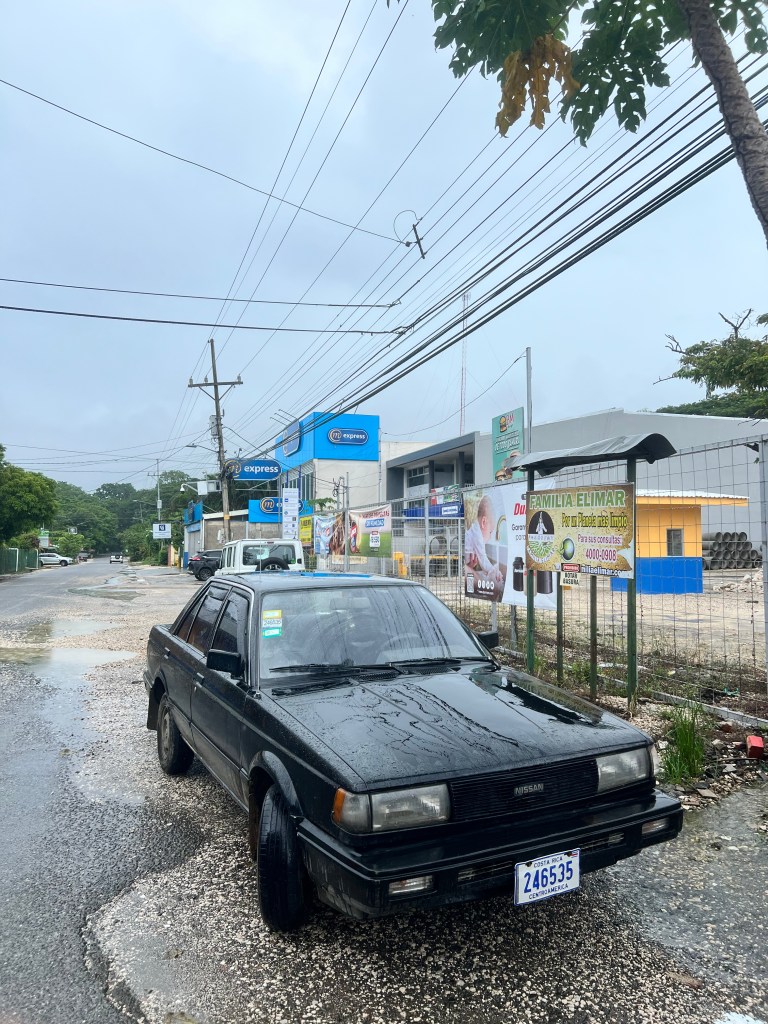
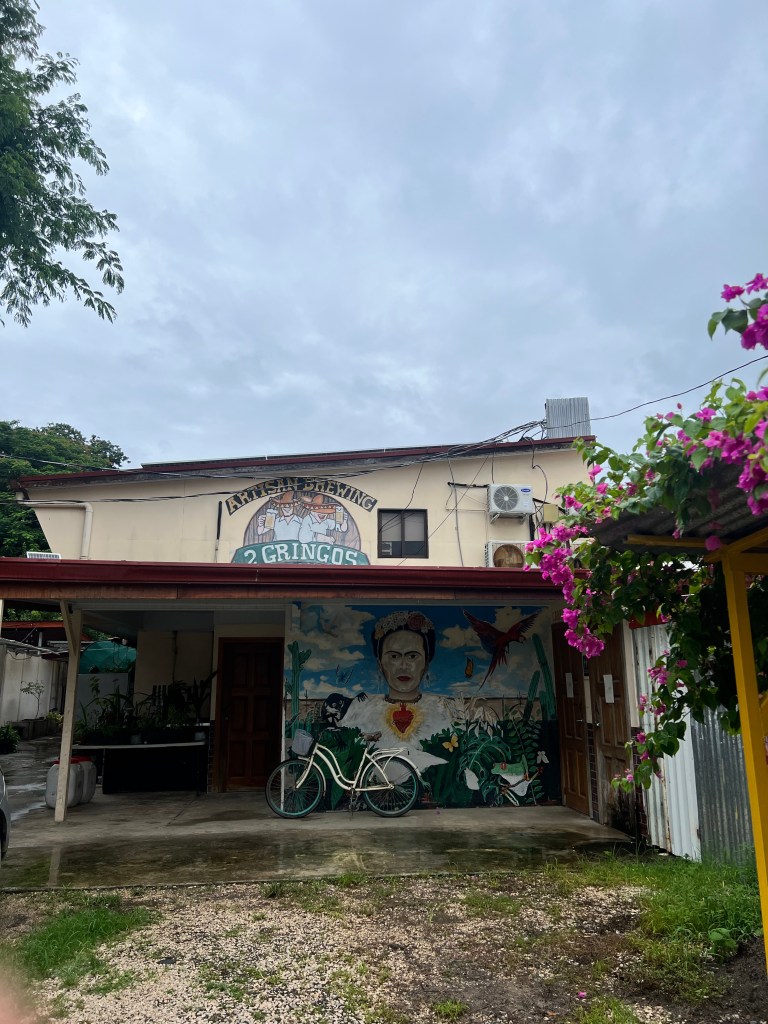

Nosara, on the contrary, is a pristine little town and requires wheels to get around comfortably, and locals are not the main population, that’s for sure. For the first time since visiting Costa Rica, I was once again the minority.
The sanctuary is located about 20 minutes from the main square, which includes an organic grocery store that carried all my favourite Whole Foods products, served fresh poke, and played Texas Sun through the speakers.
When we finally arrived, gates with monkeys engraved on them greeted us. A sweet girl on a motorbike wearing jean shorts and a yellow t-shirt came five minutes after I got there. She let me in, told me to put some bug spray on since the mosquitos were extra bad that day, and then drove off. She did not work there but definitely arrived with good timing.
I looked around and the trees that surrounded me were some of the tallest I’d seen in a while. I could hear nature all around me, but there was so much of it, it quickly became white noise. Everything was so green—it was healing. As someone who lives in a building with roads and cars surrounding me, it was refreshing to be in a place that wasn’t unnatural, in a place that existed in such messy, perfect ways.
Fabian, an important part of Sibu Sanctuary and an incredibly talented guide, greeted me with a warm smile and kind eyes as he walked towards where I was traipsing about.
He wore big black boots with orange soles, a tweed hat, and pants with a lot of pockets. He applied citronella to his neck and I immediately asked for some, since the mosquitoes were already barking and I came so unprepared in my white capris, neon green crop top, and black platform sandals. I did bring a hat, though.
We waited 15 minutes, then another 5, and a few phone calls later, I realized it would just be me and Fabian, since everyone else canceled. What are the odds?
Fabian dove headfirst into nature in a way that was very refreshing for me, albeit a little off-putting at times. His fingers would dig into a termite nest and then he’d laugh through a toothy smile and say for the fifth time, “Don’t worry, it won’t hurt you,” as he’d nudge me toward the nest. He would burst into a bird call mid-conversation and sidetrack me into a little pathway to show me trees he thought I’d find interesting—and every time, he was correct. They were very interesting.
Honestly, it made me feel like I was a kid on a TVO show following a guide who was on a mission to unlock natural treasures, and I loved every second of it.
After climbing some steep, stony steps uphill, we arrived at a large caged enclosure with some beautiful, colorful birds. Fabian would often ask me if I knew what something was, and honestly, I wouldn’t. At one point, he asked me how many legs a spider has and I said six.
But when we got to the cage, I saw this gorgeous, bright red bird. Its body was long and slender, and it was shifting side to side at a weird angle. When it turned a bit, I could see its long red wing that had patches of light blue, yellow, and green decorating the bottom like trim on a lace dress.
When Fabian asked me what it was, I hesitantly said… parrot? I was correct this time.
Its eyes were the size of a watermelon seed, but I saw the kind of longing, suffering, and emptiness in that little seed that I hadn’t seen in a while. This parrot—although now cared for by loving volunteers—won’t live out its full, glorious life. It was found with part of its wing cut off and needs consistent care and a locked cage to sleep in, or else a snake will have him for dinner at night.
Next, we headed over to an area outside their head office for the second part of the tour—an interactive presentation with the owner, Nikki. On the walk there, we found these baby raccoon-type animals called Coatis. Their snouts were digging into the ground looking for bugs and roots, and such dedicated snouts they were. They reminded me of my cat.
Then what I can only describe as literally a treehouse included basket-woven couches with cozy cushions and a table with all sorts of knick-knacks from the jungle and photos of the four different types of monkeys that live in Costa Rica—Spider Monkeys, White-faced Capuchins, Squirrel Monkeys, and the most common, the Mantled Howler Monkey.
They are all endangered species.
There was meant to be a projector screen and loudspeakers, but on the day I visited, there was a regional scheduled power outage, so instead there was a humble MacBook setup with their themed PowerPoint slideshow propped righteously.
Nikki greeted me with such eager joy, even though I was literally the only visitor and she was meant to present to a whole group of people. It didn’t stop her from telling me one hell of a story. To the point where I had to hide the fact that I was crying on occasion because I kept being like, Wait, what? That’s happening? What?
The presentation began with this engaging adventure into nature, a series of conversations about the plants and animals around us and how monkeys are primates and quite similar to us with their fingers and toes.
The Howler Monkey can be heard far and wide in Costa Rica—it could basically be their national animal. It was the first thing I heard when I entered my hotel and didn’t say anything, too scared to even ask what it was.
But turns out, it was these spoiled queens that like to eat good juicy fruit. Their croaks are actually used as the sounds for dinosaurs in Jurassic Park, I learned that day.
Nikki started telling me about what they do at the sanctuary, which in a nutshell, is caring for animals that have been hurt by humans and can’t live in the wild on their own anymore.
Because of the power outage, the first thing Nikki spoke to me about—with a concerned laugh—was how she really hoped to get a load of bedding in the laundry so the monkeys could have clean sheets before everything shut down.
She told me a story of a monkey that had a miscarriage and had wept in Nikki’s lap for three days while she mourned the death of her child. She told me about how, when a monkey mom gives birth to a baby, her galpals will show up and help take care of the child so the mom can rest for a bit. She said she’s seen the grief, the sadness, and the anxiety firsthand when these little guys suffer, and likewise, has seen them incredibly happy and full of life when they’re in the right environment.
There have been thousands upon thousands of monkey deaths from the power lines in Costa Rica over the past decade, especially as development has grown. These power lines, built directly in the homes of the Howlers and other species, are often mistaken for tree branches, and when their hands make contact with exposed wire, they’re electrocuted and instantly killed. The ones that do survive are left with permanent damage. If they’re lucky, they can make it to Sibu or another sanctuary; if not, they perish.
A simple solution and a cost-effective one, would be to simply insulate the power lines. Nikki and I even chatted about the idea of tourists compensating for the price as a fee for traveling in the country. The exchange made perfect sense to me (if there was a guarantee the money would go to the right place)—that if these power lines are needed to accommodate the mass influx of people coming to Costa Rica to enjoy the fruits of its bountiful nature, then there should be a tax to preserve it.
However, without regulation, enforcement, and a severe case of short-term thinking, these power lines remain uninsulated and used as a playground for innocent monkeys. Actually, these power lines are apparently getting so big and powerful that insulation might eventually be ineffective.
Sibu Wildlife Sanctuary installs monkey bridges, ideally in the color green, all over the area so that the monkeys can use them to get around instead of the dangerous power lines. But monkey bridge builders aren’t posted at every Howler Monkey death intersection, so it can end up being quite a bandaid solution.
The last part of the tour was visiting the rest of the animals in the sanctuary, including the monkeys hurt by the power lines. Some were limping, scurrying in their own unique ways, and others were just resting, staring into space with deep, complex expressions.
No creature deserves this life.
The volunteers and staff are so kind. The way they interact with the animals is as if they’re checking in on their younger siblings. I could see the way each and every one of them would perk up when we visited, and I could tell they were dearly cared for there. It made me happy and sad. Happy that they have a safe new home, sad that they couldn’t be in their natural habitat where they truly belong.
It’s a very odd feeling witnessing a tragedy you yourself are taking part in. My tourism plays a role in the added development, but I really do think that if tourism plays a role, then we can make a change as well.
My single trip transformed the way I will spend my money in the future, changing how I choose to purchase accommodations and what company I book anything with abroad, making note of their environmental considerations before I engage with them. I’ll never be perfect but I can at least try a bit. I really don’t want my enjoyment to come at the cost of the exploitation of anything.
If we boycotted developers that didn’t prioritize the natural environment to build their new hotels, resorts, and luxury apartments, I can only imagine how differently they would have to operate.
With that being said, if your money is still something you want to have no restrictions over, that’s completely fair. There are also free ways to help out so you can have the best of both worlds.
This Is Not Pura Vida is a campaign by International Animal Rescue to bring awareness to the monkey electrocutions, and there’s a petition trying to get signatures to put pressure on the government to enforce power line insulation and all-around safety for monkeys. Quick, easy and needle-moving option for those who want to make a difference.
Save the howlers friends, they don’t freakin deserve to die because humans like to relax in luxury: SIGN THE PETITION!
Travelling solo to Costa Rica was such a beautiful adventure for me. It’s gorgeous place, even through the downpour there was such magic to the area. I’d go back any day but blessed to have been able to visit it once and hear the howls.
*Oh and support Sibu Wildlife Sanctuary, if you’re in Costa Rica book a visit! You can also donate, adopt an animal and of course – go follow their socials! Truly are gems, they were such kind, real people, vibes 10/10!
 My Soft Rebellion
Leave a comment